
Fingerroot
In its own language: กระชาย
Boesenbergia rotunda
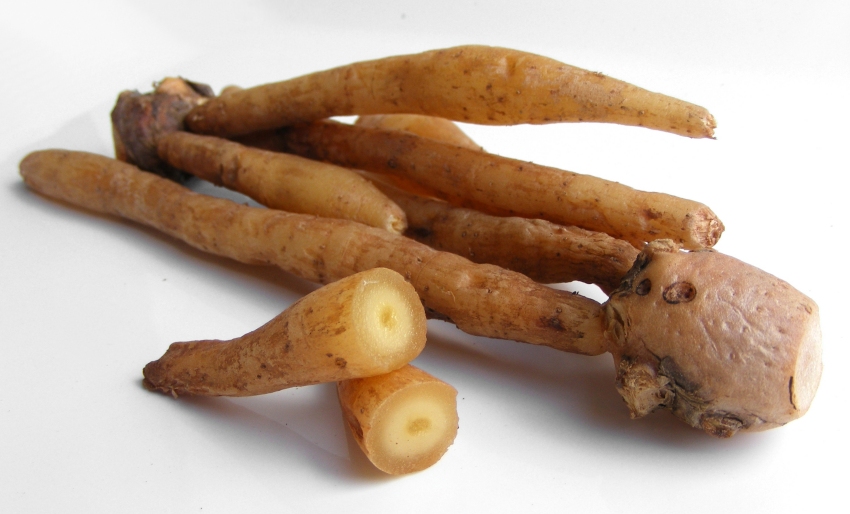
The finger-shaped rhizome of a tropical ginger relative, used fresh or pickled in Southeast Asian cooking.
Native to southern China and Malaysia, this rhizome resembles small fingers and belongs to the ginger family. It offers a sharp, citrusy bite and is essential in Thai curries, Cambodian pastes, and Indonesian tonics.
- Rhizomes look like clusters of fingers growing from a central stem.
- Native to tropical rainforests in southern China and Malaysia.
- Essential ingredient in Thai kaeng tai pla and Cambodian kroeung.
- Used to make jamu, a traditional Indonesian herbal tonic.
- Often sold pickled or frozen in Western grocery stores.
What is Fingerroot?
This plant produces an underground stem called a rhizome that splits into clusters resembling human fingers. The above-ground leaves are oval with sharp tips, and the sheaths covering the stalks are red. Small white or light pink flowers bloom individually near the base. The inner flesh varies in color and aroma depending on the specific variety grown in the wild.
Where does Fingerroot come from?
The species originates from the tropical rainforests of southern Yunnan Province in China and extends westward into Malaysia. It is an annual crop adapted to humid, forested environments. While indigenous to these regions, it has since spread to other parts of Southeast Asia and India through cultivation.
What does Fingerroot taste like?
The rhizome delivers a distinct pungency with notable citrus notes. Its taste profile sits between ginger and galangal, offering a sharp, earthy bite that brightens heavy dishes. The flavor is present both when raw and after cooking, making it versatile for various preparation styles.
How Fingerroot is grown and processed
Farmers cultivate this herb in tropical climates where it thrives in rainforest conditions. The rhizomes spread in bunches, accumulating nutrients in their swollen centers. Harvest involves digging up these root clusters. In Western markets, the fresh roots are often unavailable, so they are typically sold pickled or frozen to preserve their texture and flavor.
Fingerroot, drawn
How Fingerroot is used
Cooks use the young rhizomes raw as vegetables or incorporate them into main courses. In Thailand, it is a key ingredient in kaeng tai pla and various kroeung pastes. In Cambodia, it appears under the name k'cheay. Indonesians use it in flavorful curry dishes and to ferment tempeh. It also serves as a base for jamu, a traditional herbal tonic mixture.
Fingerroot in the world's kitchens
Thai cuisine relies on krachai for its signature aromatic depth in soups and pastes. Javanese cooks in Indonesia utilize temu kunci extensively in local recipes. Cambodian kitchens use k'cheay in traditional spice blends. The root is also found in Indian home cooking, though less centrally than in its native range.
At a glance: where it turns up
By meal
Cuisines

Traditional and medicinal use
Traditional medicine systems in the region employ the rhizome as a healing agent. It is studied for its potential health benefits and used in folk remedies. Cooks should note that it is sometimes confused with Alpinia officinarum, another ginger-family plant known as lesser galangal.
Buying and storing Fingerroot
Fresh roots spoil quickly, so they are often preserved by pickling or freezing for later use. Dried forms are less common in standard markets compared to other ginger relatives.
What to use instead of Fingerroot
Cooking without it usually involves substituting galangal or ginger, though the flavor profile differs slightly. It is frequently mistaken for Alpinia officinarum, which shares the common name lesser galangal but is a distinct species.
The trade in Fingerroot
The spice is cultivated in small-scale home gardens across Indonesia, Indochina, and India. Commercial trade in the West focuses on processed forms like pickled or frozen roots rather than fresh harvests. Research institutions also study the plant for microbiological and medicinal properties.
Meal
It features prominently in dinner dishes across Southeast Asia, particularly in savory curries and stews. Young roots may be eaten as a snack or side vegetable. It also appears in preserved forms like pickles, which serve as condiments or street-food accompaniments.
Questions people ask about Fingerroot
What does fingerroot taste like?
It has a sharp, pungent flavor with distinct citrus notes. It is earthy and spicy, similar to ginger but with a brighter, more acidic edge that works well in soups and pastes.
Where does fingerroot come from?
It is indigenous to the tropical rainforests of southern Yunnan Province in China and western Malaysia. It is now widely grown in Indonesia, Thailand, Cambodia, and India.
How is it used in cooking?
Chefs use the rhizome fresh in curries, soups, and pastes. Young roots can be eaten raw as vegetables. It is also fermented into tempeh or brewed into traditional herbal tonics.
Can I find fresh fingerroot outside Asia?
Fresh roots are rare in Western markets due to perishability. You will mostly find them pickled in jars or frozen in blocks at Asian grocery stores or specialty food shops.
Good reading and sources
- Boesenbergia rotunda on WikipediaEncyclopedia
- More photos on Wikimedia CommonsPhotos and video
- Wikidata recordOpen data
The facts on this page come from the Wikipedia article "Boesenbergia rotunda", written by its contributors and used under the CC BY-SA 4.0 licence, and from its Wikidata record (CC0). EveryMasala rewrote the text in its own words, with AI assistance, and compares every page with the article to make sure no passage is copied. It may be reused under the same CC BY-SA 4.0 licence with a link back.
It may contain mistakes. Names, strengths and customs differ from one grower, kitchen or shop to the next. Traditional and medicinal uses are described as tradition, never as medical advice, and none of this is a substitute for a doctor. If something is wrong, tell us. Last refreshed 2026-10-04.
More from China
All the spices of China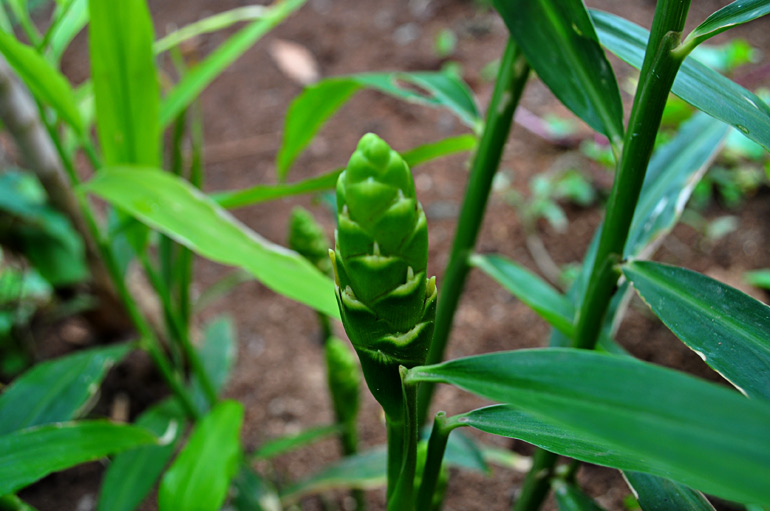 🇮🇩 Indonesia and 5 moreGinger
The pungent rhizome of a flowering perennial, one of the world's most traded spices.Root · Hot and fiery · Sharp and pungent
🇮🇩 Indonesia and 5 moreGinger
The pungent rhizome of a flowering perennial, one of the world's most traded spices.Root · Hot and fiery · Sharp and pungent
 🇨🇳 China and 3 moreStar anise八角 (bājiǎo)
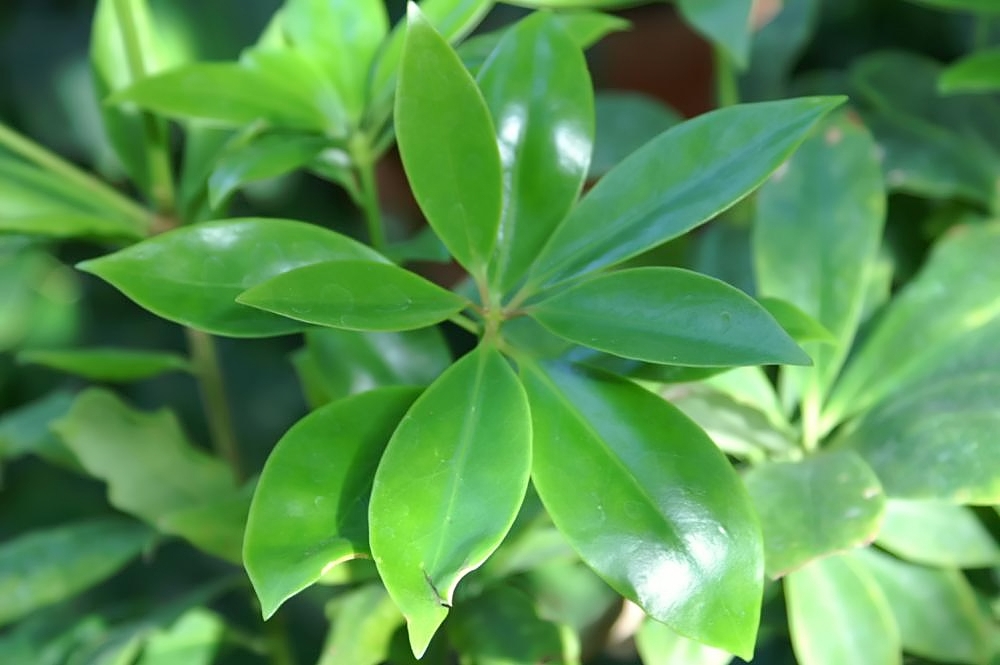
The reddish-brown star-shaped fruit of a Chinese evergreen tree, used for its licorice-like flavor.Fruit · Sweet and mellow · Anise and liquorice
🇨🇳 China and 3 moreStar anise八角 (bājiǎo)
The reddish-brown star-shaped fruit of a Chinese evergreen tree, used for its licorice-like flavor.Fruit · Sweet and mellow · Anise and liquorice
 🇮🇩 Indonesia and 5 moreIndonesian cinnamon
A strong, affordable bark from Sumatra used as a common spice and oil source.Bark · Warm and sweet-spiced · Sharp and pungent
🇮🇩 Indonesia and 5 moreIndonesian cinnamon
A strong, affordable bark from Sumatra used as a common spice and oil source.Bark · Warm and sweet-spiced · Sharp and pungent
 🇮🇩 Indonesia and 5 moreAndaliman
A citrus-scented, tongue-numbing seed husk related to Sichuan pepperFruit · Numbing and tingling · Citrus and bright
🇮🇩 Indonesia and 5 moreAndaliman
A citrus-scented, tongue-numbing seed husk related to Sichuan pepperFruit · Numbing and tingling · Citrus and bright
Its cousins elsewhere
 🇾🇪 Yemen and 1 moreZhugسحوق
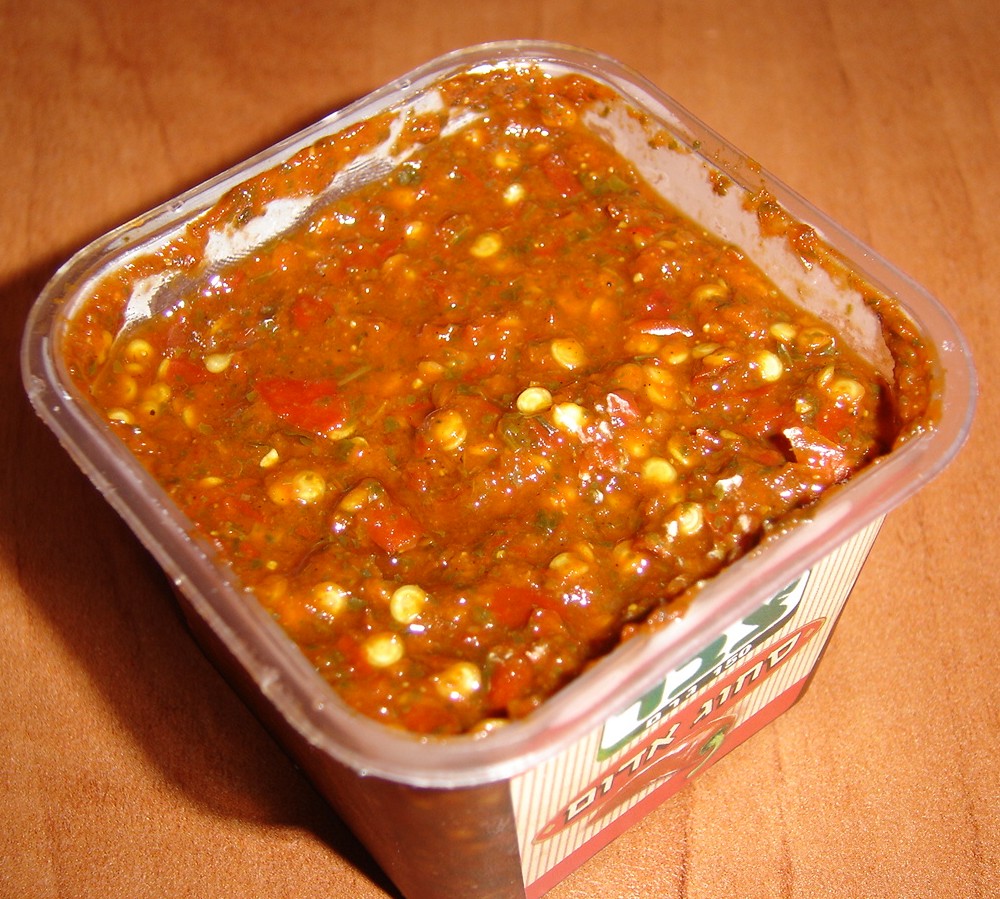
A Yemeni hot sauce of crushed chilies, garlic, and corianderHot and fiery · Sharp and pungent
🇾🇪 Yemen and 1 moreZhugسحوق
A Yemeni hot sauce of crushed chilies, garlic, and corianderHot and fiery · Sharp and pungent
 🇳🇱 Netherlands and 5 moreJuniper berry
The fleshy seed cone of the juniper tree, a piney spice for game and gin.Sharp and pungent · Citrus and bright
🇳🇱 Netherlands and 5 moreJuniper berry
The fleshy seed cone of the juniper tree, a piney spice for game and gin.Sharp and pungent · Citrus and bright
 🇯🇵 JapanShichimi七味唐辛子
A Japanese seven-ingredient spice blend for finishing soups and noodlesBlend · Hot and fiery · Citrus and bright
🇯🇵 JapanShichimi七味唐辛子
A Japanese seven-ingredient spice blend for finishing soups and noodlesBlend · Hot and fiery · Citrus and bright
 🇮🇷 Iran and 1 moreGalbanum
A bitter Persian gum resin used in ancient incense and modern green perfumesResin · Bitter · Sharp and pungent
🇮🇷 Iran and 1 moreGalbanum
A bitter Persian gum resin used in ancient incense and modern green perfumesResin · Bitter · Sharp and pungent