
Sesame
Sesamum indicum
The drought-hardy seed of a flowering plant, prized for its oil and nutty taste.
Sesamum indicum is an ancient oilseed crop domesticated in India over five millennia ago. It yields small white or black seeds that are rich in fat and used globally for cooking oil, condiments, and garnishes.
- Domesticated in India over 5,500 years ago.
- Capsules shatter easily, complicating harvest.
- Seeds contain up to 50% oil by weight.
- A major allergen requiring strict labeling.
- India, Myanmar, and Sudan are top producers.
What is Sesame?
Sesame refers to the edible seeds harvested from Sesamum indicum, a plant also known as benne. The seeds grow inside a four-chambered capsule that bursts open when ripe. They are tiny, flat, and oval-shaped, appearing in shades of white or black depending on the variety. The seeds possess a distinctively rich, nutty flavor profile. They are highly valued for their substantial oil content, which makes them a primary source for cooking fats and traditional medicines across many regions.
Where does Sesame come from?
The cultivated species originated in the Indian subcontinent, with archaeological evidence of charred seeds dating back to 3500 BC. While wild relatives exist in Africa, the domesticated form was established there thousands of years ago. Trade routes soon carried the crop to Mesopotamia, where it was known by names related to oil. Ancient Egyptians also cultivated it, using it in medicine and placing it in tombs. Some scholars suggest an alternative origin in Ethiopia, but the Indian connection remains the most documented for the commercial variety.
What does Sesame taste like?
The primary taste note is a warm, roasted nuttiness. This comes from the high concentration of oils within the seed. When raw, the flavor is milder, but heating or roasting intensifies the aromatic qualities. The texture is slightly crunchy when whole. The oil itself carries these savory notes, making it suitable for both sweet and savory applications without adding bitterness.
How Sesame is grown and processed
This crop thrives in hot conditions above 23°C and tolerates drought better than most agricultural plants. It grows well in fertile, well-drained soil but struggles in waterlogged or salty ground. Farmers must harvest carefully because the capsules shatter easily, scattering seeds if left too long. To prevent loss, plants are often cut by hand and stacked to finish ripening. Mechanical harvesting is difficult due to this shattering trait, though breeders are working on varieties that hold their seeds tighter.
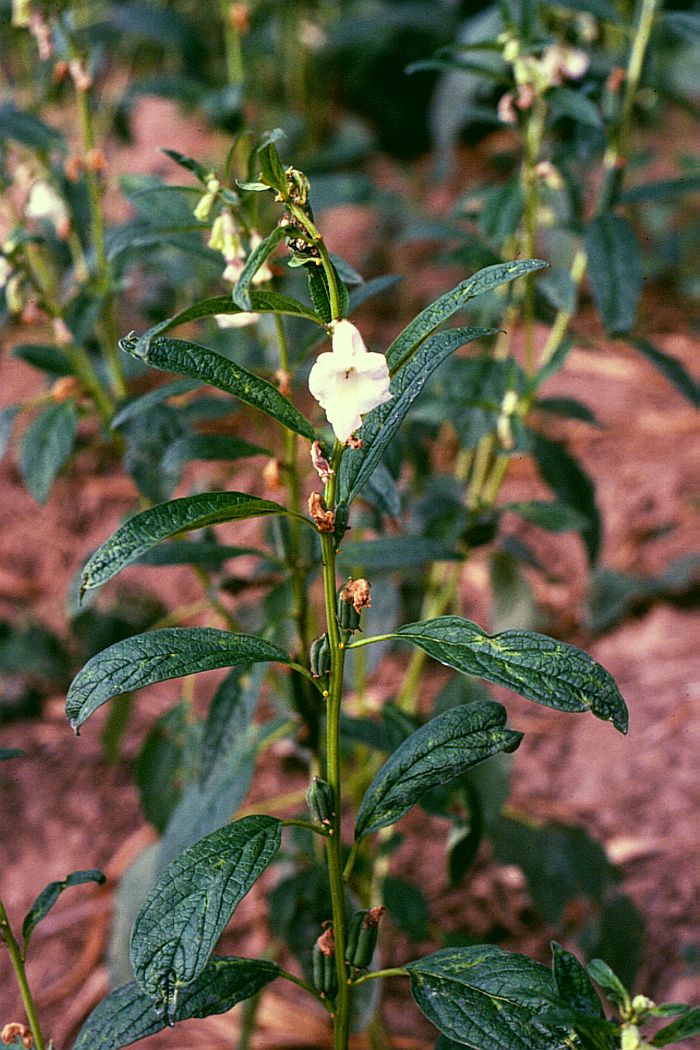
Sesame, drawn
How Sesame is used
Seeds are used whole as a topping for breads, buns, and salads. They are ground into pastes like tahini or pressed into oil for frying and seasoning. In Japan, roasted seeds are essential for flavoring dishes and sauces. West African cuisines use the seeds to thicken soups or make coffee-like drinks. Caribbean traditions combine sugar and seeds to create brittle-style sweets. The oil serves as a substitute for butter in baking and cooking.
Sesame in the world's kitchens
Japanese cuisine relies heavily on sesame oil and seeds for daily cooking. West African dishes use the seeds for thickening and flavor. Caribbean markets sell sesame-sugar bars as street food. Ancient Mesopotamian and Egyptian records show early adoption. Modern American agriculture produces significant quantities under contract. Chinese producers focus on darker seeds for regional markets.
At a glance: where it turns up


Spiritual and ceremonial use
In ancient Egypt, sesame was included in medicinal scrolls and placed in royal tombs, suggesting ritual significance. The Ebers Papyrus lists it among healing substances. There is no widespread modern religious requirement tied to the seed, though its historical presence in burial goods indicates spiritual value in antiquity.
Sesame at celebrations
No specific modern festivals are exclusively tied to sesame. Its historical role in Egyptian tombs suggests ceremonial use in funerary rites. It does not have a prominent place in contemporary wedding or harvest celebrations in major producing nations.
Traditional and medicinal use
Traditional medicine systems have used sesame leaves and seeds for various ailments. Leaves were applied as a laxative or treatment for dysentery. Seeds were believed to support blood pressure and glucose levels, though these are folk observations rather than clinical advice. The oil was used externally and internally for general health maintenance.
Buying and storing Sesame
Seeds must be dried thoroughly before storage to prevent rancidity. Moisture levels should stay below six percent. Improper drying leads to rapid heating and spoilage in bins. Whole seeds keep longer than ground products. Oil extracted from them should be stored away from light and heat to preserve quality.
What to use instead of Sesame
No single spice perfectly mimics sesame. Poppy seeds offer a similar crunch but lack the nutty depth. Sunflower seeds can replace sesame in some baked goods but change the flavor profile. Tahini can sometimes be substituted with other nut butters in recipes, though the taste will differ significantly.
The trade in Sesame
India, Myanmar, and Sudan lead global production. Japan is the largest importer, using sesame extensively in its culinary tradition. China imports large volumes for oil extraction and exports lower-grade seeds to Southeast Asia. The United States and Canada import for processing. Prices fluctuate based on quality, oil content, and purity. Contamination issues occasionally disrupt trade flows between producing and importing nations.
Meal
Sesame appears across all meal types. It tops breakfast items like bagels and cereals. It flavors lunch and dinner dishes in Asian and Middle Eastern cuisines. Snacks include sesame bars and street foods. Preserves and confections often feature the seeds. It is also used in drinks and desserts where its nutty profile complements sweet ingredients.
Blends with Sesame
Questions people ask about Sesame
Where does sesame come from?
The cultivated species originated in the Indian subcontinent. Archaeological finds date its use back to 3500 BC. Wild relatives are native to Africa, but the commercial crop was established in India first.
What does sesame taste like?
It has a rich, warm, and nutty flavor. Roasting the seeds enhances this taste. The oil carries the same savory notes, making it versatile for both sweet and savory dishes.
How is sesame grown?
It grows in hot, dry conditions where other crops might fail. The pods burst open when ripe, so farmers often cut plants by hand to prevent seed loss during harvest.
Is sesame an allergen?
Yes, it is a common allergen. Reactions can range from mild to severe anaphylaxis. Many countries now require it to be clearly labeled on packaged foods due to its prevalence.
What are the main uses of sesame?
Seeds are eaten whole, ground into paste, or pressed for oil. It flavors breads, soups, and sauces. The oil is used for cooking and baking worldwide.
Good reading and sources
- Sesame on WikipediaEncyclopedia
- More photos on Wikimedia CommonsPhotos and video
- Wikidata recordOpen data
The facts on this page come from the Wikipedia article "Sesame", written by its contributors and used under the CC BY-SA 4.0 licence, and from its Wikidata record (CC0). EveryMasala rewrote the text in its own words, with AI assistance, and compares every page with the article to make sure no passage is copied. It may be reused under the same CC BY-SA 4.0 licence with a link back.
It may contain mistakes. Names, strengths and customs differ from one grower, kitchen or shop to the next. Traditional and medicinal uses are described as tradition, never as medical advice, and none of this is a substitute for a doctor. If something is wrong, tell us. Last refreshed 2026-10-04.
More from India
All the spices of India 🇮🇳 India and 4 moreFennel
The anise-scented seeds and crisp bulb of a Mediterranean perennial herbSeed · Anise and liquorice · Sweet and mellow
🇮🇳 India and 4 moreFennel
The anise-scented seeds and crisp bulb of a Mediterranean perennial herbSeed · Anise and liquorice · Sweet and mellow
 🇮🇳 India and 2 moreCardamom
Aromatic seeds from spindle-shaped pods used in sweet and savory dishes across Asia and the Middle East.Seed · Sharp and pungent · Warm and sweet-spiced
🇮🇳 India and 2 moreCardamom
Aromatic seeds from spindle-shaped pods used in sweet and savory dishes across Asia and the Middle East.Seed · Sharp and pungent · Warm and sweet-spiced
 🇮🇳 IndiaMalabar pepper
A Geographical Indication black pepper from Kerala and neighbouring regions.Seed · Sharp and pungent
🇮🇳 IndiaMalabar pepper
A Geographical Indication black pepper from Kerala and neighbouring regions.Seed · Sharp and pungent
 🇮🇳 India and 5 moreMustard seed
Tiny seeds from Brassica plants that become a sharp condiment or cooking oil.Seed · Sharp and pungent · Hot and fiery
🇮🇳 India and 5 moreMustard seed
Tiny seeds from Brassica plants that become a sharp condiment or cooking oil.Seed · Sharp and pungent · Hot and fiery
Its cousins elsewhere
All seed 🇮🇩 Indonesia and 3 moreNutmeg
The dried seed of a tropical evergreen tree, prized for its warm, pungent flavor.Seed · Warm and sweet-spiced · Sweet and mellow
🇮🇩 Indonesia and 3 moreNutmeg
The dried seed of a tropical evergreen tree, prized for its warm, pungent flavor.Seed · Warm and sweet-spiced · Sweet and mellow
 🇲🇽 MexicoMulato pepper
A dried Mexican chilli with notes of chocolate and licoriceSweet and mellow · Warm and sweet-spiced
🇲🇽 MexicoMulato pepper
A dried Mexican chilli with notes of chocolate and licoriceSweet and mellow · Warm and sweet-spiced
 🇮🇳 India and 4 moreCurry paste
A blended mixture of spices and aromatics used as the base for curries in Asia.Warm and sweet-spiced · Earthy and deep
🇮🇳 India and 4 moreCurry paste
A blended mixture of spices and aromatics used as the base for curries in Asia.Warm and sweet-spiced · Earthy and deep
 🇲🇽 Mexico and 2 moreVanilla
The cured fruit of a climbing orchid, the world's primary source of vanilla flavouringSweet and mellow · Warm and sweet-spiced
🇲🇽 Mexico and 2 moreVanilla
The cured fruit of a climbing orchid, the world's primary source of vanilla flavouringSweet and mellow · Warm and sweet-spiced