Tamarind
Tamarindus indica
The sweet and sour pulp of a tropical tree pod used in sauces and drinks.
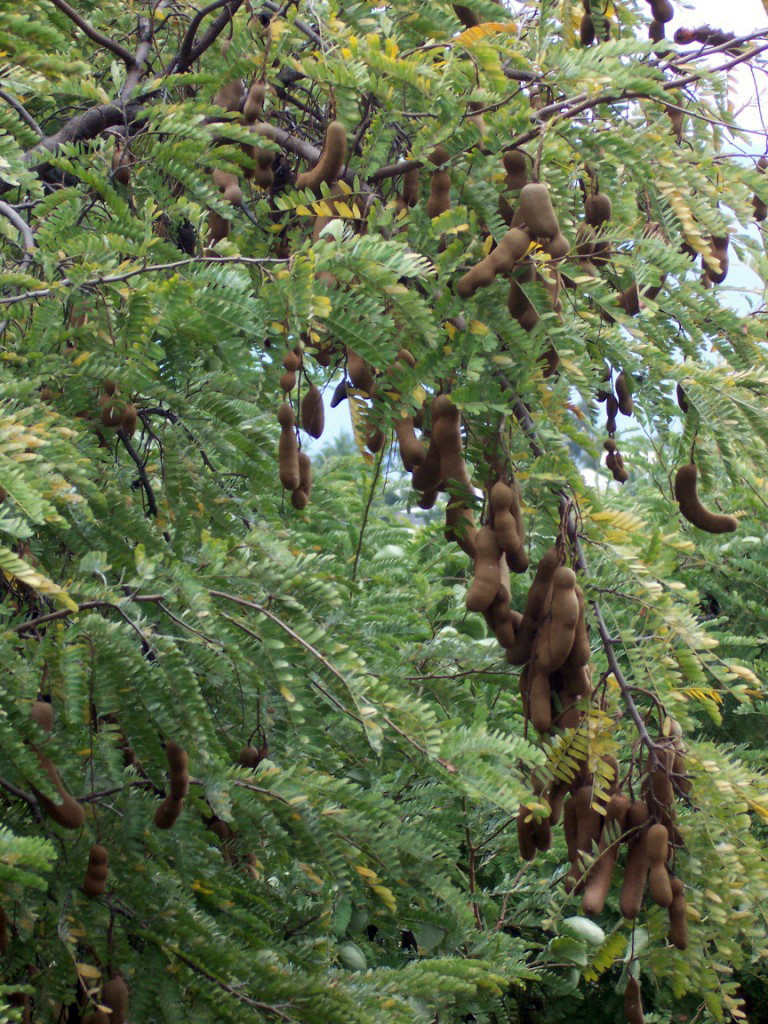
Tamarind is the edible fruit of a long-living leguminous tree native to tropical Africa. Its brown pods hold a sticky, tangy-sweet pulp that serves as a key souring agent in Asian, African, and Latin American cooking. The fruit is also processed into syrups and candies.
- Native to the Sudanian belt in Africa.
- Pulp is a key souring agent in Asian cooking.
- Used in Jewish diaspora recipes since the 7th century.
- Produces a hard, dark red heartwood.
- Traditional Ramadan drink in the Levant.
What is Tamarind?
This spice comes from a medium-growth tree that can reach thirty metres tall. It belongs to the legume family and produces irregular, vase-shaped crowns. The fruit is a hard-shelled pod containing a fleshy pulp. The taste is a mix of sweet and sour notes, with the acidity level varying by variety. Young pods are very sour, while mature ones become sweeter. The seeds inside are glossy and flattened. The tree itself has bright green leaves and inconspicuous red and yellow flowers.
Where does Tamarind come from?
The plant is indigenous to the dry savannas of the Sudanian belt in tropical Africa. It likely spread to South Asia through human cultivation thousands of years ago. By the sixteenth century, Spanish and Portuguese colonists introduced it to Mexico and Central America. It became a staple ingredient in those regions. Some historical reports mistakenly claim it is native to India due to its long history of cultivation there.
What does Tamarind taste like?
The primary characteristic is a sharp tang balanced by natural sugars. The sourness comes from acids present in the fruit. As the pod matures, the acidity decreases and sweetness increases. Some cultivars have almost no sour taste when fully ripe. The flavour profile is described as earthy and fruity. It provides a distinct zesty depth to dishes without adding heat or bitterness.
How Tamarind is grown and processed
The tree thrives in full sun and prefers clay, loam, or sandy soil. It resists drought and salt wind, making it suitable for coastal areas. However, it is sensitive to frost. Farmers prune branches to ease harvesting. Pods are pulled from the stalk when ready. Mature trees can produce hundreds of kilograms of fruit annually. The wood is hard and durable, often used for furniture or carvings.
Tamarind, drawn
How Tamarind is used
Cooks use the pulp as a souring agent in curries, chutneys, and sauces. It is essential in Filipino soups like sinigang and Indonesian sayur asem. In the Middle East, it flavours meat stews and is boiled into a traditional Ramadan drink called tamr-hindi. Jewish communities use it in stuffed grape leaves and meatballs. The young leaves are cooked in salads, and the seeds are roasted as snacks or brewed as a coffee substitute.
Tamarind in the world's kitchens
Indian cuisine uses it extensively in rice dishes and lamb recipes. Filipino cooking relies on it for sour soups. Levantine and Iranian cuisines combine it with dried fruits for sweet-sour stews. Mexican cuisine incorporates it into chicken dishes with local ingredients. Burmese salads feature blanched tender leaves. Senegalese preparations mix the pulp with sugar for sweet meats.
At a glance: where it turns up
Celebrations


Spiritual and ceremonial use
Jewish merchants brought the fruit along the Silk Road in the seventh century. Syrian Jews prepare a syrup called ouc using the pulp. This syrup flavours traditional dishes like yebra and bazargan. Baghdadi, Cochin, and Bene Israel communities in India use it in regional recipes. The ingredient holds a place in diasporic culinary traditions rather than religious rituals.
Tamarind at celebrations
In the Levant region, the fruit is central to a Ramadan beverage. Street vendors serve this drink during the holy month. It is prepared by boiling the pulp and straining the mixture. The drink is often enhanced with rosewater or lemon juice. It serves as a refreshing hospitality offering during evening gatherings.
Traditional and medicinal use
Folk medicine uses the fruit as a poultice for fevers. It is traditionally believed to relieve constipation due to laxative effects. In Java, steamed pulp treats skin rashes. Nigerian traditions suggest roots help with leprosy. Thai practices involve tablets for weight reduction. Ethiopian customs use softened seeds for parasitic worms. These uses are described as traditional beliefs only.
The trade in Tamarind
The name derives from Arabic meaning Indian date. Marco Polo recorded early variations of the name. The tree is cultivated worldwide in tropical zones. Its widespread distribution supports global trade. The wood and seeds also have industrial applications. Seed oil is used in paints, and kernel powder sizes textiles.
Meal
It appears in snacks, preserves, and drinks. Sweet tamarind candy is a common street treat. The pulp is mixed with sugar to make chutneys served with samosas. A popular beverage involves boiling the paste with sugar and lemon. This drink is sold by street vendors carrying large copper pots. It is also used in breakfast or lunch dishes across various cultures.
Questions people ask about Tamarind
Where does tamarind come from?
It is indigenous to tropical Africa, specifically the dry savannas of the Sudanian belt. It spread to Asia through ancient cultivation and was later introduced to the Americas by European colonists.
What does tamarind taste like?
It offers a complex balance of sweet and sour flavours. The acidity is prominent in young pods, while ripe varieties are sweeter. The taste is often described as earthy and fruity.
How is tamarind used in cooking?
The sticky pulp acts as a souring agent in curries, soups, and sauces. It is also made into chutneys, candies, and traditional beverages. Young leaves are cooked in salads.
Is tamarind part of any religious traditions?
Yes, it is used in Jewish diaspora cuisine, particularly by Syrian and Indian Jewish communities. It is also featured in Levantine Ramadan drinks as a hospitality offering.
Good reading and sources
- Encyclopaedia BritannicaArticle
- Here’s what you can cook with tender tamarind leavesThe Hindu, Article
- Tamarind on WikipediaEncyclopedia
- More photos on Wikimedia CommonsPhotos and video
- Wikidata recordOpen data
The facts on this page come from the Wikipedia article "Tamarind", written by its contributors and used under the CC BY-SA 4.0 licence, and from its Wikidata record (CC0). EveryMasala rewrote the text in its own words, with AI assistance, and compares every page with the article to make sure no passage is copied. It may be reused under the same CC BY-SA 4.0 licence with a link back.
It may contain mistakes. Names, strengths and customs differ from one grower, kitchen or shop to the next. Traditional and medicinal uses are described as tradition, never as medical advice, and none of this is a substitute for a doctor. If something is wrong, tell us. Last refreshed 2026-10-04.
More from Sudan
All the spices of Sudan 🇬🇭 Ghana and 5 morePrekeseprɛkɛsɛ
The scented pod of a West African tree, used to perfume soups.Fruit · Sweet and mellow
🇬🇭 Ghana and 5 morePrekeseprɛkɛsɛ
The scented pod of a West African tree, used to perfume soups.Fruit · Sweet and mellow
 🇪🇹 Ethiopia and 4 moreKorarima
The dried seeds of a wild ginger relative, essential to Ethiopian and Eritrean cooking.Seed · Warm and sweet-spiced · Citrus and bright
🇪🇹 Ethiopia and 4 moreKorarima
The dried seeds of a wild ginger relative, essential to Ethiopian and Eritrean cooking.Seed · Warm and sweet-spiced · Citrus and bright
 🇨🇳 China and 5 moreRoselle
The deep red calyx of a hibiscus plant, steeped into a tart drink or cooked as a leafy green.Fruit · Sour and tart · Citrus and bright
🇨🇳 China and 5 moreRoselle
The deep red calyx of a hibiscus plant, steeped into a tart drink or cooked as a leafy green.Fruit · Sour and tart · Citrus and bright
 🇮🇳 India and 5 moreSesame
The drought-hardy seed of a flowering plant, prized for its oil and nutty taste.Seed · Warm and sweet-spiced
🇮🇳 India and 5 moreSesame
The drought-hardy seed of a flowering plant, prized for its oil and nutty taste.Seed · Warm and sweet-spiced
Its cousins elsewhere
All fruit 🇦🇺 AustraliaWattleseed
The edible seed of Australian Acacia trees, traditionally ground into flour by Aboriginal Australians.Seed · Sweet and mellow · Earthy and deep
🇦🇺 AustraliaWattleseed
The edible seed of Australian Acacia trees, traditionally ground into flour by Aboriginal Australians.Seed · Sweet and mellow · Earthy and deep
 🇮🇳 IndiaChammanthi podi
A dry coconut and spice condiment from Kerala that preserves fresh chutney for months.Hot and fiery · Earthy and deep
🇮🇳 IndiaChammanthi podi
A dry coconut and spice condiment from Kerala that preserves fresh chutney for months.Hot and fiery · Earthy and deep
 🇱🇾 Libya and 1 morePilpelchumaפלפלצ'ומה
A spicy garlic paste made from steamed peppers and olive oil, rooted in Libyan Jewish tradition.Hot and fiery · Sharp and pungent
🇱🇾 Libya and 1 morePilpelchumaפלפלצ'ומה
A spicy garlic paste made from steamed peppers and olive oil, rooted in Libyan Jewish tradition.Hot and fiery · Sharp and pungent
 🇲🇽 Mexico and 5 moreAnnatto
The orange-red pigment from achiote seeds used as a natural food coloring and mild spice.Seed · Earthy and deep · Sweet and mellow
🇲🇽 Mexico and 5 moreAnnatto
The orange-red pigment from achiote seeds used as a natural food coloring and mild spice.Seed · Earthy and deep · Sweet and mellow