🇨🇳 The spices of China
54 spices from China, best known first, across 13 cities, markets and growing areas.
Chinese cooking spans vast regions, shaped by climate and history. Seasoning relies on soy sauce, vinegar, and chili peppers to balance five tastes. Staples like rice and wheat anchor the meals.
- Chili peppers from the Americas became essential in Sichuan cuisine.
- Eight Cuisines group styles like Sichuan, Cantonese, and Shandong.
- Soy sauce replaced table salt as the primary seasoning source.
- Northern China relies on wheat noodles; southern China prefers rice.
- Five-spice powder balances pungent, sweet, sour, bitter, and salty tastes.
Spice in China
Chinese cuisine varies widely across provinces due to geography and history. Northern areas favor wheat and millet in a dry climate, while southern regions grow rice near rivers. Imperial preferences and foreign trade introduced new ingredients over centuries. The Eight Cuisines group styles like Sichuan, Cantonese, and Shandong. Each region uses local resources differently. Cooking aims to balance yin and yang energies. Food is judged by color, scent, and taste. This diversity creates distinct culinary identities within one national tradition.
The spices of the kitchen
Sichuan cuisine uses chili peppers from the New World for heat. Garlic and shallots season some northern dishes more than spices. Soy sauce provides saltiness instead of table salt. Vinegar adds sourness to balance flavors. Fermented bean pastes deepen savory notes. Tea leaves sometimes infuse meat or rice. Sesame cakes appear in baked goods. These elements create pungent, sweet, sour, bitter, and salty profiles.
Blends and pastes
Five-spice powder mixes star anise, cloves, cinnamon, Sichuan pepper, and fennel. This blend seasons meats and stews. Doubanjiang, a fermented bean paste, forms the base of many Sichuan sauces. Soybean paste enhances noodles and stir-fries. Chili oil adds heat and aroma to cold dishes. These condiments are essential for building complex layers of flavor in everyday cooking.
Today
Modern Chinese kitchens adapt traditional recipes for faster lifestyles. Fast food chains serve fried noodles and rice bowls. Migration spreads Chinese flavors globally, with local modifications. Protected geographical indications safeguard regional specialties. Trade introduces new ingredients while preserving ancient techniques. The diaspora maintains culinary traditions abroad, influencing global palates.
The facts in this overview come from the Wikipedia article "Chinese cuisine", written by its contributors and used under the CC BY-SA 4.0 licence. EveryMasala rewrote the text in its own words, with AI assistance, and compares every page with the article to make sure no passage is copied. It may be reused under the same CC BY-SA 4.0 licence with a link back.
 🇵🇪 Peru and 5 moreChili pepperchīlli
The pungent berry of the Capsicum plant, used to add heat to dishes worldwide.Fruit · Hot and fiery · Earthy and deep
🇵🇪 Peru and 5 moreChili pepperchīlli
The pungent berry of the Capsicum plant, used to add heat to dishes worldwide.Fruit · Hot and fiery · Earthy and deep
 🇮🇳 India and 4 moreFennel
The anise-scented seeds and crisp bulb of a Mediterranean perennial herbSeed · Anise and liquorice · Sweet and mellow
🇮🇳 India and 4 moreFennel
The anise-scented seeds and crisp bulb of a Mediterranean perennial herbSeed · Anise and liquorice · Sweet and mellow
 🇮🇳 India and 4 moreBasil
A tender culinary herb with glossy leaves and a licorice-like aroma, native to tropical Asia.Leaf · Anise and liquorice · Warm and sweet-spiced
🇮🇳 India and 4 moreBasil
A tender culinary herb with glossy leaves and a licorice-like aroma, native to tropical Asia.Leaf · Anise and liquorice · Warm and sweet-spiced
 🇮🇹 Italy and 5 moreMustard
A pungent paste made from ground mustard seeds mixed with liquid and spices.Paste · Sharp and pungent · Hot and fiery
🇮🇹 Italy and 5 moreMustard
A pungent paste made from ground mustard seeds mixed with liquid and spices.Paste · Sharp and pungent · Hot and fiery
 🇲🇽 Mexico and 5 morePaprika
A red powder made from dried Capsicum annuum peppers, used to colour and flavour dishes across Europe and the Middle EasSeed · Sweet and mellow · Hot and fiery
🇲🇽 Mexico and 5 morePaprika
A red powder made from dried Capsicum annuum peppers, used to colour and flavour dishes across Europe and the Middle EasSeed · Sweet and mellow · Hot and fiery
 🇫🇷 France and 3 moreHerbes de Provenceèrbas de Provença
A dried herb blend from southwestern France, now a global kitchen staple.Warm and sweet-spiced · Herbal and green
🇫🇷 France and 3 moreHerbes de Provenceèrbas de Provença
A dried herb blend from southwestern France, now a global kitchen staple.Warm and sweet-spiced · Herbal and green
 🇨🇳 China and 5 moreChili oil辣椒油
A red condiment of infused vegetable oil and hot peppers used across Asia and Europe.Hot and fiery · Smoky
🇨🇳 China and 5 moreChili oil辣椒油
A red condiment of infused vegetable oil and hot peppers used across Asia and Europe.Hot and fiery · Smoky
 🇨🇳 ChinaMala麻辣
A fiery, tongue-numbing Chinese seasoning of Sichuan pepper and chilliesPaste · Hot and fiery · Numbing and tingling
🇨🇳 ChinaMala麻辣
A fiery, tongue-numbing Chinese seasoning of Sichuan pepper and chilliesPaste · Hot and fiery · Numbing and tingling
 🇨🇳 China and 1 moreGarlic powder
A dry, savory spice made from dehydrated and ground garlic cloves.Seed · Sharp and pungent · Earthy and deep
🇨🇳 China and 1 moreGarlic powder
A dry, savory spice made from dehydrated and ground garlic cloves.Seed · Sharp and pungent · Earthy and deep
 🇨🇳 ChinaEr jing tiao二荆条
A fragrant Chinese chili cultivar prized for its deep hue and medium heatChilli · Hot and fiery · Sharp and pungent
🇯🇵 Japan and 4 moreMugwort艾草 (ài cǎo)
Aromatic leaves from the Artemisia genus used in Asian cuisine and traditional medicine.Leaf · Bitter · Herbal and green
🇨🇳 ChinaEr jing tiao二荆条
A fragrant Chinese chili cultivar prized for its deep hue and medium heatChilli · Hot and fiery · Sharp and pungent
🇯🇵 Japan and 4 moreMugwort艾草 (ài cǎo)
Aromatic leaves from the Artemisia genus used in Asian cuisine and traditional medicine.Leaf · Bitter · Herbal and green
 🇨🇳 China and 5 moreShiso紫蘇
A mint-family herb with serrated leaves, used fresh or pickled across East Asia.Leaf · Herbal and green · Sharp and pungent
🇨🇳 China and 5 moreShiso紫蘇
A mint-family herb with serrated leaves, used fresh or pickled across East Asia.Leaf · Herbal and green · Sharp and pungent
 🇨🇳 China and 5 moreRoselle
The deep red calyx of a hibiscus plant, steeped into a tart drink or cooked as a leafy green.Fruit · Sour and tart · Citrus and bright
🇨🇳 China and 5 moreRoselle
The deep red calyx of a hibiscus plant, steeped into a tart drink or cooked as a leafy green.Fruit · Sour and tart · Citrus and bright
 🇲🇽 Mexico and 5 moreCapsicum frutescens
A small, wild chili species with erect berries, native to the Americas and widely grown in tropical regions.Chilli · Hot and fiery
🇲🇽 Mexico and 5 moreCapsicum frutescens
A small, wild chili species with erect berries, native to the Americas and widely grown in tropical regions.Chilli · Hot and fiery
 🇮🇳 India and 5 moreSesame
The drought-hardy seed of a flowering plant, prized for its oil and nutty taste.Seed · Warm and sweet-spiced
🇨🇳 China and 4 moreLesser galangal高良薑
An aromatic Asian rhizome with orange flesh and a sweet, gentle spiceRoot · Sweet and mellow · Warm and sweet-spiced
🇮🇳 India and 5 moreSesame
The drought-hardy seed of a flowering plant, prized for its oil and nutty taste.Seed · Warm and sweet-spiced
🇨🇳 China and 4 moreLesser galangal高良薑
An aromatic Asian rhizome with orange flesh and a sweet, gentle spiceRoot · Sweet and mellow · Warm and sweet-spiced
 🇮🇳 India and 5 moreBlack pepper
The dried fruit of a climbing vine, the world's most traded spice.Fruit · Sharp and pungent · Hot and fiery
🇮🇳 India and 5 moreBlack pepper
The dried fruit of a climbing vine, the world's most traded spice.Fruit · Sharp and pungent · Hot and fiery
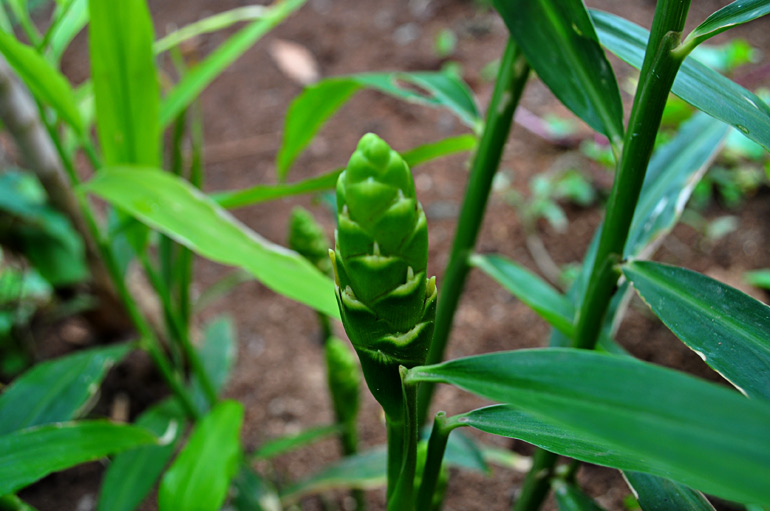 🇮🇩 Indonesia and 5 moreGinger
The pungent rhizome of a flowering perennial, one of the world's most traded spices.Root · Hot and fiery · Sharp and pungent
🇮🇩 Indonesia and 5 moreGinger
The pungent rhizome of a flowering perennial, one of the world's most traded spices.Root · Hot and fiery · Sharp and pungent
 🇨🇳 China and 5 moreGarlic chives韭菜
A flat-leaved Allium with a garlic scent, used across Asia as a herb and vegetable.Leaf · Sweet and mellow
🇨🇳 China and 5 moreGarlic chives韭菜
A flat-leaved Allium with a garlic scent, used across Asia as a herb and vegetable.Leaf · Sweet and mellow
 🇰🇷 South Korea and 5 moreKorean mint배초향
An anise-scented Asian mint leaf used in Korean stews and herbal traditionsLeaf · Anise and liquorice · Herbal and green
🇰🇷 South Korea and 5 moreKorean mint배초향
An anise-scented Asian mint leaf used in Korean stews and herbal traditionsLeaf · Anise and liquorice · Herbal and green
 🇺🇸 United States and 4 moreSassafras
An aromatic tree of North America and East Asia, famed for filé powder and root teaLeaf · Citrus and bright · Anise and liquorice
🇺🇸 United States and 4 moreSassafras
An aromatic tree of North America and East Asia, famed for filé powder and root teaLeaf · Citrus and bright · Anise and liquorice
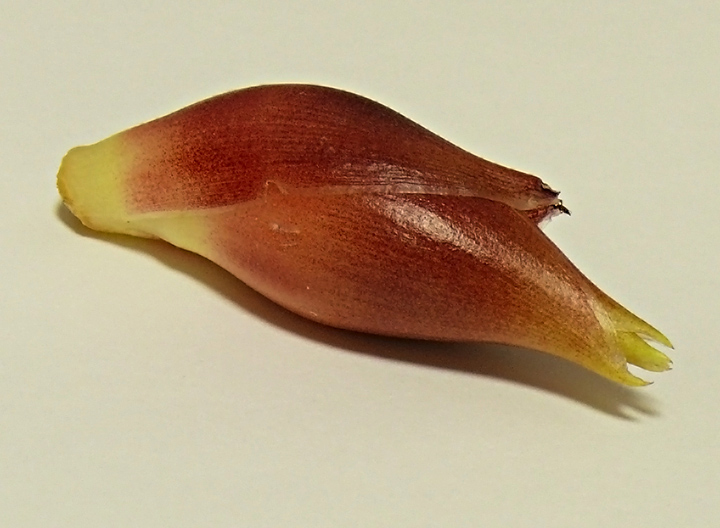 🇯🇵 Japan and 1 moreMyoga茗荷
The edible flower buds and shoots of a woodland ginger native to East Asia.Flower · Sharp and pungent · Citrus and bright
🇯🇵 Japan and 1 moreMyoga茗荷
The edible flower buds and shoots of a woodland ginger native to East Asia.Flower · Sharp and pungent · Citrus and bright
 🇮🇩 Indonesia and 5 moreKencur沙姜
A stemless ginger-family rhizome with a peppery, camphorous biteRoot · Sharp and pungent · Herbal and green
🇮🇩 Indonesia and 5 moreKencur沙姜
A stemless ginger-family rhizome with a peppery, camphorous biteRoot · Sharp and pungent · Herbal and green
 🇮🇳 India and 5 moreBlack pepper
The dried fruit of a climbing vine, the world's most traded spice.Sharp and pungent · Hot and fiery
🇮🇳 India and 5 moreBlack pepper
The dried fruit of a climbing vine, the world's most traded spice.Sharp and pungent · Hot and fiery
 🇮🇳 India and 5 moreGinger
The pungent rhizome of a flowering plant, widely used as a spice and folk medicine.Root · Hot and fiery · Sharp and pungent
🇮🇳 India and 5 moreGinger
The pungent rhizome of a flowering plant, widely used as a spice and folk medicine.Root · Hot and fiery · Sharp and pungent
Photo credits on this page
The small pictures above come from Wikimedia Commons under free licences. Some are cropped to fit.
- Paprika: Takkk, CC BY-SA 3.0, source
- Garlic powder: John Phelan, CC BY-SA 3.0, source
- Chili pepper: Takeaway, CC BY-SA 4.0, source
- Tabasco pepper: Unknown author, Public domain, source
- Sassafras: Randy Everette, CC BY-SA 3.0, source
- Kencur: Hariadhi, CC BY-SA 4.0, source
- Myoga: Mariko GODA, CC BY-SA 3.0, source
- Black pepper: Rainer Zenz, CC BY-SA 3.0, source
- Ginger: Forest & Kim Starr, CC BY 3.0, source
- Shiso: Dalgial, CC BY-SA 3.0, source
- Mustard: Rainer Zenz, CC BY-SA 3.0, source
- Chili oil: Alpha, CC BY-SA 2.0, source
- Herbes de Provence: Unknown author, CC BY 2.0, source
- Er jing tiao: Borshingwoods, CC BY-SA 4.0, source
- Mala: Theorb, Public domain, source
- Ginger: Venkatx5, CC BY-SA 3.0, source
- Garlic chives: Kurt Stüber [1], CC BY-SA 3.0, source
- Korean mint: Dalgial, CC BY-SA 3.0, source
- Roselle: Bamouzou, CC BY-SA 4.0, source
- Sesame: Anna Frodesiak, CC0, source
- Basil: Castielli, CC BY-SA 3.0, source
- Black pepper: David Monniaux, CC BY-SA 3.0, source
- Fennel: Elekes Andor, CC BY 4.0, source
The weekly digest
Every Monday: seven spices you may not know, what is cooking this week, and one blend explained step by step.